Back to Services
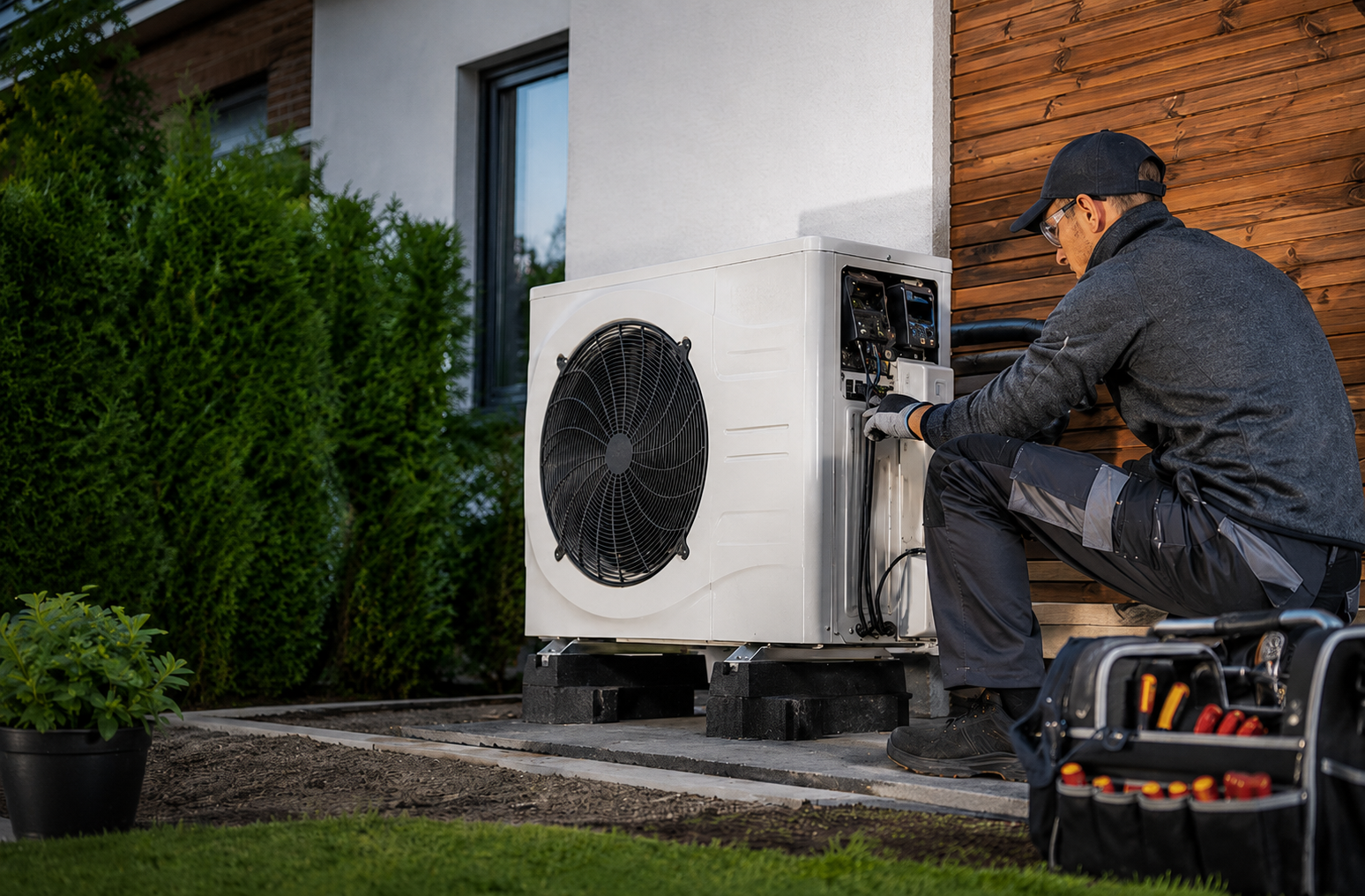
Heat pump installation

Heat pump installation

Understand your options, then get a quick quote.

Every home is different. Learn how the main heat pump technologies work and where each is most suitable, so you can make a confident, informed decision about heating your property.

The quick quote opens our online estimate tool, where a few questions about your home give you an instant, no-obligation heat pump quote.

Types of heat pump

How each technology works

Heat pumps move existing heat from one place to another rather than burning fuel. The right choice depends on your property, available space and how you use heating and hot water.

Air-to-Water Heat Pumps

A system that absorbs heat from the outside air and transfers it to water, feeding your radiators, underfloor heating and hot-water cylinder.

Heating and hot water

Where the heat comes from

Heat is drawn from the outdoor air, even at low temperatures.

How heat is transferred

Warmth is delivered around the home through a wet central-heating system: radiators, underfloor pipes and a hot-water cylinder.

Typical applications

Most common choice for UK homes replacing a gas or oil boiler.

Suitable properties

Houses and flats with a wet central-heating system and outdoor space for the external unit.

Advantages

  • Provides both heating and hot water
  • Works with many existing wet heating systems
  • Well suited to the Boiler Upgrade Scheme

Things to consider

  • May need larger radiators or underfloor heating for best efficiency
  • Requires space for an outdoor unit and a hot-water cylinder

Air-to-Air Heat Pumps

A system that moves heat from the outside air and distributes it directly as warm air through indoor units.

Heating and cooling (no hot water)

Where the heat comes from

Heat is taken from the outdoor air.

How heat is transferred

Warm (or cool) air is delivered directly into rooms through indoor air-handling units, rather than through radiators.

Typical applications

Popular for heating and cooling individual rooms, offices and open-plan spaces.

Suitable properties

Homes or commercial spaces wanting flexible room-by-room heating and cooling.

Advantages

  • Can provide cooling in summer as well as heating
  • Fast to respond and warm a room quickly
  • No hot-water cylinder required for the heating function

Things to consider

  • Does not produce domestic hot water on its own
  • Grant support may be available for qualifying fully electric properties under applicable schemes; eligibility, funding levels and requirements must be checked at the time of application
  • Support may be available up to £2,500 where the property has never previously used gas heating and all other eligibility conditions are met

Ground-Source Heat Pumps

A system that extracts heat stored in the ground through buried pipework and uses it to heat your home.

Heating and hot water

Where the heat comes from

Heat is collected from the ground via a buried ground loop, either in trenches or boreholes.

How heat is transferred

Heat is passed to a wet central-heating system and a hot-water cylinder, similar to an air-to-water system.

Typical applications

Homes with sufficient land or the ability to drill boreholes, seeking very steady efficiency.

Suitable properties

Properties with available land, often rural homes or new builds.

Advantages

  • Very stable performance as ground temperature changes little
  • Typically high efficiency over the year
  • Outdoor unit noise is minimal

Things to consider

  • Higher upfront cost due to ground works
  • Requires land for trenches or space for boreholes

Water-Source Heat Pumps

A system that draws heat from a nearby body of water such as a lake, river or borehole and transfers it into the home.

Heating and hot water

Where the heat comes from

Heat is taken from a suitable water source close to the property.

How heat is transferred

Heat is delivered to a wet heating system and hot-water cylinder.

Typical applications

Properties located near a reliable and appropriate water source.

Suitable properties

Homes beside lakes, rivers or with access to a suitable borehole, subject to survey and permissions.

Advantages

  • Water holds heat well, supporting steady efficiency
  • Can be very effective where a suitable source exists

Things to consider

  • Requires access to a suitable water source and relevant permissions
  • Site-specific feasibility and assessment are essential

Hybrid Heat Pump Systems

A system that pairs a heat pump with an existing or new boiler, switching between them to suit conditions.

Heating and hot water

Where the heat comes from

Primarily from the air, with the boiler providing support when required.

How heat is transferred

Both units feed the same wet heating system, with controls deciding which is most appropriate at a given time.

Typical applications

Homes that are not yet ready for a full heat-pump-only system, or where peak demand is high.

Suitable properties

Properties where a full heat-pump system is not yet practical, or as a staged upgrade.

Advantages

  • Eases the transition from a boiler to a heat pump
  • Can help manage very cold periods and high hot-water demand

Things to consider

  • Still relies partly on a fossil-fuel boiler
  • Requires careful control setup to work efficiently

Grant guidance

Support may be available for qualifying fully electric homes

Air-to-air heat pumps are not automatically excluded from grant support. Depending on the scheme and your property, support may be available where the project forms part of a move to fully electric heating, with support of up to £2,500 potentially available where the property has never previously used gas heating. Air-to-water heat pumps may qualify for support of up to £9,000 under the same condition, subject to the current scheme rules and eligibility requirements.

Grant amounts, scheme rules and qualifying conditions can change. Eligibility must be confirmed before work begins, and the final decision rests with the relevant scheme administrator. We can help you understand what information is needed and whether your proposed system should be assessed for support.

Energy efficiency

Designed to deliver heat efficiently

A well-designed heat pump can deliver several units of heat for each unit of electricity it uses, because it moves existing heat rather than creating it by burning fuel. Efficiency depends on good design, correct sizing and how heat is delivered around your home.

This is why we carry out a full heat-loss assessment before recommending a system, and explain any improvements such as insulation, radiators or controls that could help your system run at its best.

Installation considerations

What a good installation involves

  • A full survey and heat-loss calculation for your property
  • Correct sizing of the heat pump and hot-water cylinder
  • Suitable location for the outdoor unit with space for airflow
  • Checking radiators, pipework and controls
  • Careful commissioning and clear handover

Installation solutions

Options to suit different homes

Whether you are building new, upgrading an older system or integrating with existing radiators and underfloor heating, we can advise on a practical approach for your property.

Domestic home heat pump installations
Air-source heat pump installations
Ground-source heat pump installations
Heat pumps for new builds
Heat pump upgrades and replacements
Heating-system upgrades
Hot-water solutions
Underfloor-heating integration
Radiator-system integration
Hybrid heating solutions
Heat pump servicing and maintenance
Heat pump repairs

Ready to see what your home needs?

Answer a few quick questions and receive an instant, no-obligation heat pump quote.

Get a Quick Quote
Need Help? Contact Us