

Heat pumps can be cheaper to run than gas boilers in 2026, but savings depend on electricity prices and heating efficiency. A well-designed heat pump can cost less to operate than a modern gas boiler. However, systems with lower efficiency may cost more on standard electricity tariffs. If you're considering replacing your gas boiler, the key question is how much each system costs to deliver the same amount of heat.
Heat Pump vs Gas Boiler Running Costs in 2026
According to Ofgem's October–December 2026 energy price cap, the average unit rates for households paying by Direct Debit in Great Britain are:
| Energy source | Average unit rate |
|---|---|
| Electricity | 26.32p/kWh |
| Gas | 7.97p/kWh |
Electricity costs approximately 3.3 times more than gas per unit. However, heat pumps use electricity to transfer heat rather than generate it directly. A gas boiler operating at 90% efficiency delivers approximately 0.9kWh of useful heat from 1kWh of gas. A heat pump with a seasonal performance factor (SPF) of 3 delivers approximately 3kWh of heat from 1kWh of electricity. SPF measures heating efficiency across a complete heating season.
Cost Per kWh of Useful Heat
The following comparison uses Ofgem's October–December 2026 average unit rates.
| Heating system | Assumed efficiency | Cost per kWh of useful heat |
|---|---|---|
| Gas boiler | 90% | 8.86p |
| Heat pump | SPF 2.5 | 10.53p |
| Heat pump | SPF 3.0 | 8.77p |
| Heat pump | SPF 3.5 | 7.52p |
| Heat pump | SPF 4.0 | 6.58p |
At these rates, a heat pump needs an SPF above approximately 2.97 to deliver cheaper useful heat than a 90%-efficient gas boiler. The comparison excludes standing charges and assumes fixed unit prices.
How Much Could You Save Per Year with a Heat Pump?
Consider a household requiring 10,000kWh of useful heat annually. This is an illustrative heating demand, not a typical figure for every UK household. Each system is compared against the same heating requirement.
Important: These annual estimates apply October–December 2026 unit prices to a hypothetical full year. Actual annual energy prices may change every quarter.
| Heating system | Annual energy consumption | Estimated annual running cost |
|---|---|---|
| Gas boiler, 90% efficient | 11,111kWh gas | £886 |
| Heat pump, SPF 2.5 | 4,000kWh electricity | £1,053 |
| Heat pump, SPF 3.0 | 3,333kWh electricity | £877 |
| Heat pump, SPF 3.5 | 2,857kWh electricity | £752 |
| Heat pump, SPF 4.0 | 2,500kWh electricity | £658 |
Figures are rounded and exclude standing charges, installation costs and other household electricity or gas consumption.
A heat pump achieving SPF 3.5 would save approximately £134 annually compared with the example gas boiler. At SPF 4.0, the estimated saving increases to £227. However, an SPF 2.5 system would cost approximately £167 more per year.
How Much Would a Heat Pump Cost Per Month?
Using the same example, a heat pump with SPF 3.5 averages approximately £63 per month, compared with £74 for the gas boiler. These are annualised averages. Your actual monthly heating costs will change with seasonal demand and electricity consumption.
What Affects Heat Pump Running Costs Compared with Gas?
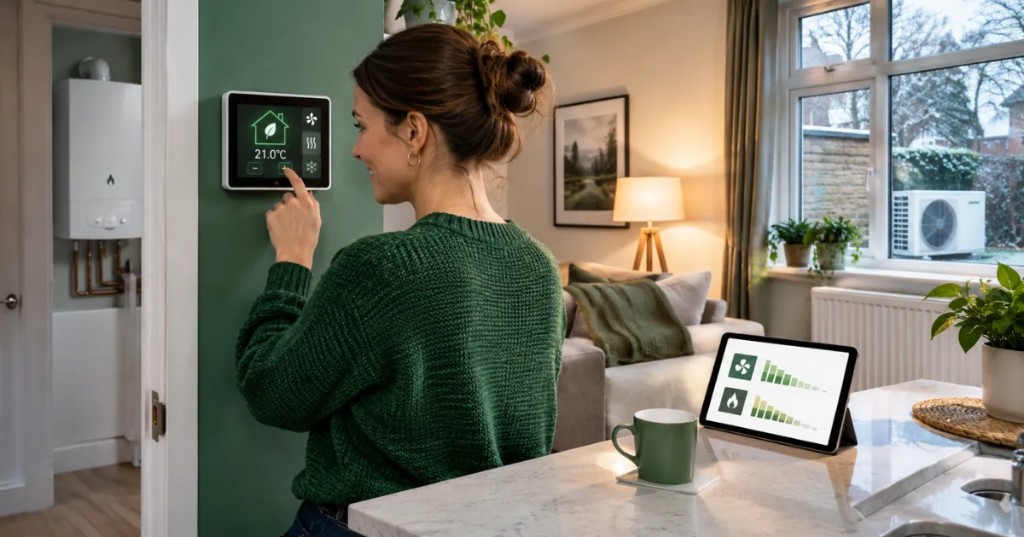
Three factors determine whether switching your heating system will reduce your bills.
1. Your Electricity Tariff
A specialist heat pump tariff can reduce running costs if you use enough electricity during lower-priced periods. Consider a heat pump delivering 10,000kWh of useful heat annually at SPF 3.5.
| Average electricity price | Estimated annual running cost |
|---|---|
| 26.32p/kWh | £752 |
| 22p/kWh | £629 |
| 18p/kWh | £514 |
| 15p/kWh | £429 |
These are hypothetical average electricity prices, not guaranteed supplier rates. Time-of-use tariffs may offer cheaper electricity at selected hours but charge more during peak periods. Your savings depend on the average rate actually paid for heat pump electricity. Energy Saving Trust provides further guidance on how specialist tariffs can affect heating bills.
2. Heat Pump Efficiency and Radiator Temperatures
Heat pumps generally work more efficiently at lower heating-water temperatures. However, your radiators must still provide enough heat to maintain comfortable indoor temperatures. Smaller radiators may require hotter water, increasing electricity consumption. In some homes, larger radiators or heating-system improvements can help reduce operating temperatures. A correctly sized heat pump should match the property's calculated heat demand.
3. Insulation and Property Heat Loss
A poorly insulated home loses heat more quickly and needs more energy to maintain its temperature. This increases heating demand regardless of whether you use gas or electricity. Higher heat loss can also require hotter radiator water, reducing heat pump efficiency. Improving insulation may lower heating demand and help the system operate at more efficient temperatures.
Are Heat Pumps Cheaper Than Gas Boilers in Winter?
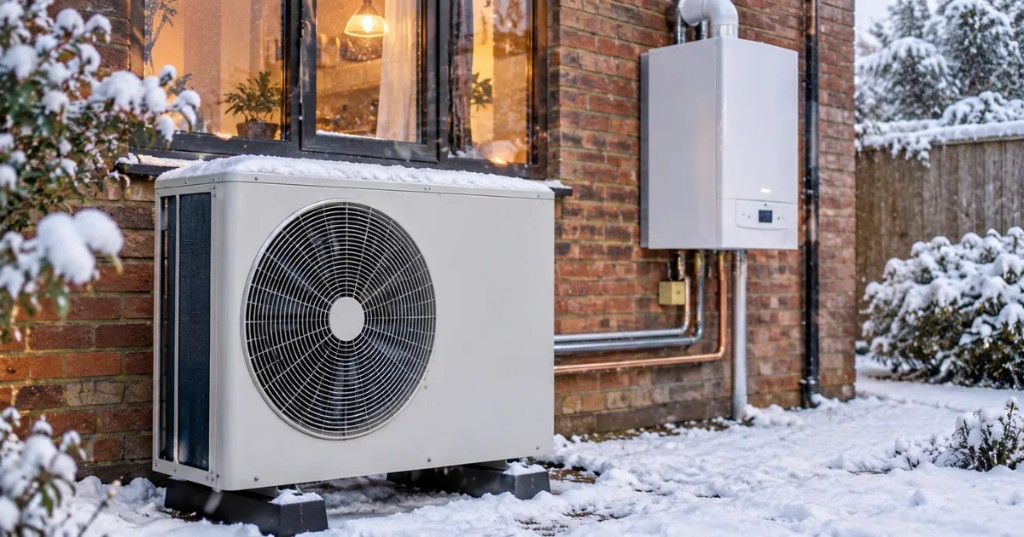
Air source heat pumps can consume more electricity during winter because homes require more heating. Their efficiency may also decrease as outdoor temperatures fall. However, properly designed systems can continue providing heat in freezing conditions. For an accurate comparison, use estimated seasonal performance rather than efficiency measured on a single cold day. The annual running-cost calculation should account for colder weather and the temperatures needed to heat your home.
Can You Save Gas Standing Charges After Switching?
You may reduce your annual energy costs further by disconnecting your gas supply completely. Ofgem's average gas standing charge for October–December 2026 is 29.68p per day. If this rate remained unchanged for a full year, removing the gas standing charge would save approximately £108. However, this saving only applies if you no longer need a gas connection. Households retaining gas for cooking or other appliances would generally continue paying the charge. Any gas disconnection costs must also be considered.
Is Switching from a Gas Boiler to a Heat Pump Worth It Financially?
Running costs are only one part of the financial decision. Heat pump installations can cost more upfront than replacement gas boilers. However, eligible homeowners in England and Wales can receive £7,500 towards an air-to-water heat pump through the Boiler Upgrade Scheme. Eligible off-gas-grid properties replacing oil or LPG heating may qualify for £9,000 under the temporary enhanced grant arrangements. A grant lowers the installation cost but does not directly reduce electricity consumption.
Example of a Simple Payback Calculation
Suppose replacing your boiler with a heat pump costs an additional £3,000 after any applicable grant.
If the heat pump saves £150 annually in running costs:
| Financial factor | Illustrative amount |
|---|---|
| Additional installation cost | £3,000 |
| Annual running-cost saving | £150 |
| Simple payback period | 20 years |
This example excludes maintenance, future energy prices and equipment replacement. It illustrates the difference between reducing heating bills and recovering additional installation costs. If your existing boiler needs replacing anyway, compare the quotations for both new systems. This provides a more useful financial comparison than using the full heat pump installation price alone.
Frequently Asked Questions
Does a Heat Pump Cost More to Run in a Poorly Insulated House?
It may. Higher heat loss increases heating demand, while hotter radiator water can reduce heat pump efficiency. The combined effect may increase electricity costs compared with a better-insulated property.
How Much Electricity Does a Heat Pump Use Per Day?
If a heat pump delivers 30kWh of useful heat at a coefficient of performance of 3, it uses approximately 10kWh of electricity. At 26.32p/kWh, this would cost around £2.63 for that day's heating. Actual daily consumption depends on your heating requirements and system performance.
Can Solar Panels Reduce Heat Pump Running Costs?
Yes. Solar panels can reduce purchased electricity when solar generation coincides with heat pump consumption. However, winter solar generation is generally lower when space-heating demand is highest. Savings depend on how much solar electricity you use directly.
Compare Your Heating Costs with Love Green Heat Pumps
If you're considering replacing your gas boiler, your property's heat demand is the starting point for a realistic running-cost comparison. At Love Green Heat Pumps, we assess heating requirements, radiator suitability and system design before recommending an installation approach. Our team can help you understand how these factors affect heat pump performance and expected electricity consumption. Explore our Heat Pumps Installation London services or contact us to discuss your existing heating system and request a quotation.
Request a quotation